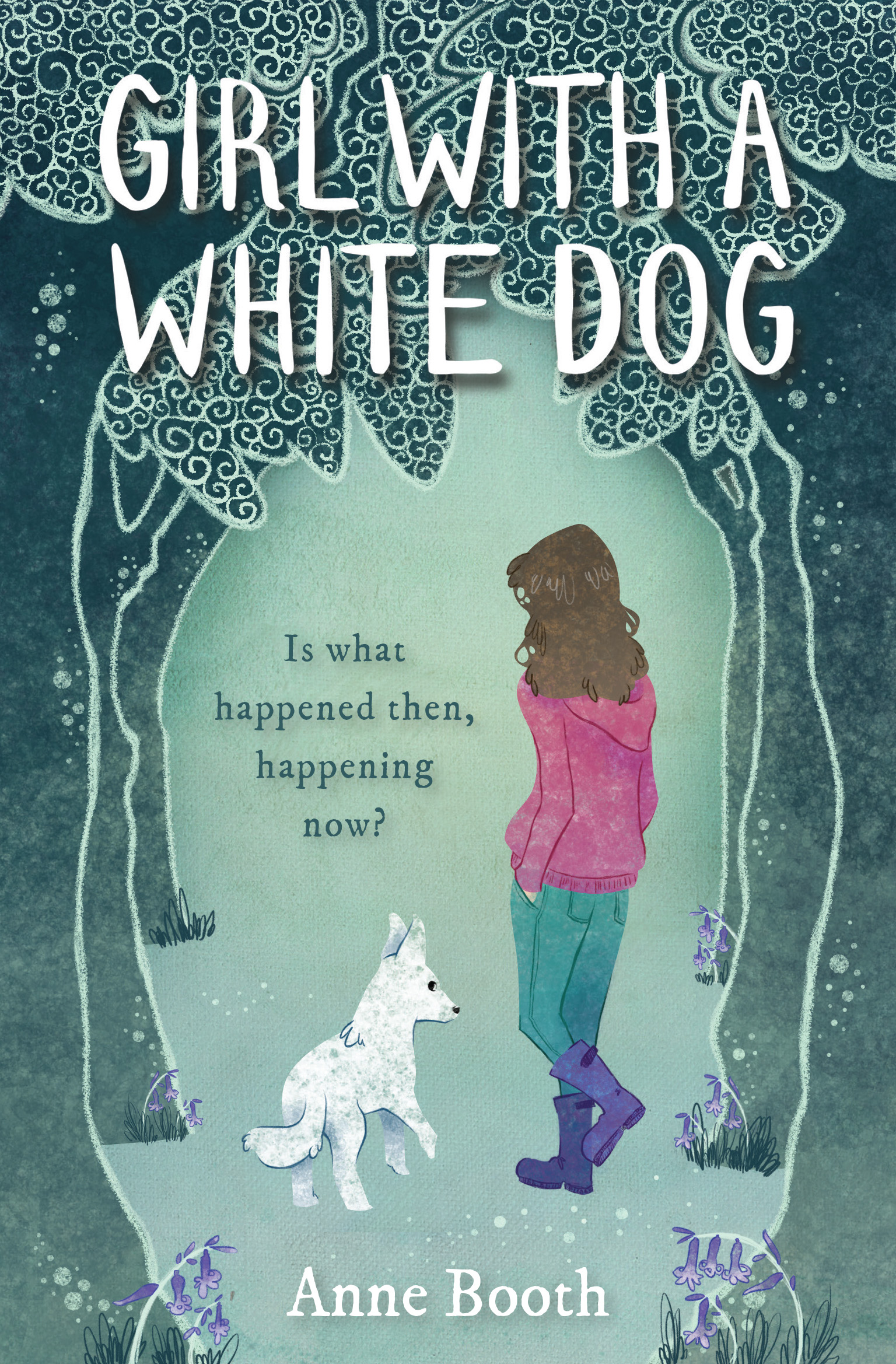
Authors Welcome had the opportunity to chat with author Anne Booth about her book
Girl with a White Dog, and learn more about her as an author.
Girl with a White Dog
is about a modern 13-year-old girl called Jessie, who lives in a small
English village and whose grandmother adopts a white Alsatian puppy.
With Snowy’s arrival a mystery starts to unfold, and as Jessie learns
about fairy tales and Nazi Germany at school, past and present begin to
slot together and she uncovers something long-buried, troubling and
somehow linked to another girl and another white dog…
AW: Who is your intended audience and why should they read your book?
Anne Booth: My intended audience is children who are learning about Nazi Germany and reading books like
The Diary of Anne Frank.
It targets children aged from 9-14. I would like them to read it
alongside all the wonderful books that are already out there, in order
to add one more perspective on the Holocaust and to become aware of
current temptations to racism and fear of ‘the other’ in our modern day,
recession-hit countries. I wanted to explore what it was like to be a
Nazi child and to believe in the stories told by the media, and to show
that children and adults today can also be subtly brainwashed and
seduced by a kind of fairytale which tells them that they are superior
and somehow more deserving of a happy ending than other people.
AW: How did you come up with the title for your book/series?
Anne Booth: Originally I was going to call my book ‘The Hidden Hours,’ but my agent, the wonderful Anne Clark, of
http://www.anneclarkliteraryagency.co.uk came up with the title ‘Girl with a White Dog’, and I am so glad that she did.
AW: Tell us a bit about your cover design? Who designed it and did you have a lot of input into the design?
Anne Booth: I so happy with the
cover! The illustrator Serena Rocca worked with the designer Philippa
Johnson and my editors Liz Bankes and Non Pratt to come up with an
intriguing cover which combined a modern day girl with a fairytale type
feeling. As fairytales are so important in the story and Jessie and
Snowy go walking in woods together it really feels true to the book.
Once the design was decided on I was shown it for my approval, and the
only input I gave was to ask Serena to make the figure of Snowy slightly
smaller, as he is a very young dog. I think it is really beautiful and I
couldn’t be happier!
AW: How long did it take to complete your novel?
Anne Booth: It took years, partly
because of all the background research and also because it was so hard
to decide on how to approach the story and what to leave out. I read
many, many history books about growing up in Nazi Germany and Nazi
policy. I read fairytales and books about fairytales and about the
Nazis’ use of fairytales and folklore in schools. I read books about
what children learned in schools in Nazi Germany, especially the book
Education in Nazi Germany by Lisa Pine. I read about dogs and the Nazis’ attitude towards animals – particularly Boria Sax’s book
Animals in the Third Reich and went to an exhibition at the Weiner library in London
http://www.wienerlibrary.co.uk
on Nazi children’s books and toys. I read books about the treatment of
the disabled by the Nazis, and watched films and documentaries. I also
went to Munich and Dachau for the weekend.
The other thing I felt it was very important to do was to read lots
and lots of other children’s books by wonderful authors like Michael
Morpurgo or Maurice Gleitzman. There are many amazing books on the
period out there by wonderful authors. I also read children’s books in
translation, and books that Nazi children would have read. In Dachau
bookshop I also came across the fascinating Young Adult American book
The Wave
by Todd Strasser, which, written in 1981 based on a real-life
experiment in 1969 by a school teacher, looks at how High School
children many years after the Second World War can be seduced into
Nazi-like attitudes. I felt that my story, apart from it being for a
slightly younger age group, was more about the subtle, creeping way we
can get into the dangerous habit of seeing ourselves as ‘goodies’ and
others as ‘baddies’. My book is about how we need to recognize the
lessons from history so that we don’t repeat the mistakes of the past
and create a society where Evil can flourish unnoticed until it is too
late.
Originally I wrote the novel entirely set in Nazi Germany, but it
didn’t quite work. I loved writing it but I was worried about the
difficulty of showing what it was like to be a Nazi child who loved
Hitler without seeming to promote Nazism, and I knew I wanted to write
about the implication of the Holocaust on today, so I changed it
completely to a modern day story with a mystery in the past. It is odd,
because having written the earlier version I feel I know a whole other
story and set of characters that nobody else does, and yet they were so
important for how I wrote the book set in the present day. I may try to
come back to them in the future, but even if I don’t I feel the process
was vital to getting to
Girl with a White Dog.
AW: Did you ever experience writer’s block? If so, what did you do to get out of the funk?
Anne Booth: Reading history books
or fiction, going to exhibitions or watching films can all help with
stimulating ideas and writing. I have two dogs, and thinking about my
writing whilst walking in the countryside can unblock lots. Getting
feedback from other writers – even constructive rejections from
publishers or agents – can all help with writer’s block and suggest new
ways of approaching things. My family have been wonderful – my husband
and teenage children have listened to plot problems and suggested
solutions- and once I had an agent I found that Anne was great when I
was losing confidence. My editors Non Pratt and Liz Bankes were also
great at encouragement during revision of the book once it was taken on
and I was writing new material. Sometimes just having a complete break –
painting or making things or going on holiday can really give time to
untangle knotty problems. Lastly, I am a religious person, and I also
find that daily prayer and mediation is vital to help me keep on track
as to why I write and what I believe in.
AW: Tell us about the challenges of getting your first novel published? About how long did it take?
Anne Booth: I have always loved
reading books and wanted to be a writer, but I didn’t have the self
belief to allow myself the time to do it. I went on my first writer’s
course about 20 years ago – a week long holiday – but although it
inspired me I did not follow on. In 1993-95 I studied part time in the
evenings for an MA in Children’s Literature, which I absolutely loved.
Ten years later, 2003-2205, married and with four young children, I
enrolled on an part time, evening M.A. course in Creative Writing.
During and immediately after that course I wrote an adult novel which
had an agent for a time but unfortunately was never picked up. The
course did however really boost my confidence, and in the meantime I was
continuing to read children’s books with my children and for my own
enjoyment. So this is a long way of saying that it really has taken me
decades to get to this point. In fact, as I wrote my first book (a
little biblical story about Jesus and Jairus’s daughter) at the age of 5
– you could say it has taken me 44 years to get published!
AW: Who is your favorite character from your book and why?
Anne Booth: I love lots of characters from the book.
I love Jessie and I love Snowy, but I am also very fond of Kate,
Jessie’s best friend. I feel very proud as a writer that her personality
is more important than her disability — I forget it myself, which is
how it should be.
AW: Who is your least favorite character and what makes them less appealing to you?
Anne Booth: My least favorite
characters are the gang Jessie’s cousin gets involved with – Liam, Danny
and Nicola. I think it will be obvious why! I do try to show that they
are children, influenced by attitudes around them, and don’t appear out
of nowhere – people like Hitler and his modern contemporaries are always
ready to exploit periods of economic hardship and find those with
contempt for others and tendencies to violence.
AW: If you could change only one thing about your novel, what would it be?
Anne Booth: I have changed so many
things in the novel in the long process of writing and re-writing it,
and have had such wonderful editing from my agent and from my
publishers, that I honestly wouldn’t change anything now. Originally I
tried to cover too many aspects of life in Nazi Germany and there are
story lines that were edited out that I do miss, but the advice to cut
them out was wise, and maybe I will be able to pick them up again in
future novels. I had more about the wonderful Sophie Scholl and The
White Rose Movement and Dietrich Bonhoeffer, for example, but at least I
did manage to mention them in my afterword!
AW: Give us an interesting or fun fact about your book/series.
Anne Booth: The book
Amazing Dogs by Jan
Bondeson was the source of one idea that is mentioned passing in my book
– that there was a college for dogs in Nazi Germany!
AW: What other books are similar to your own? What makes them alike? Did they inspire you?
Anne Booth: This is such a hard
question, as it feels arrogant to compare my books with others I admire!
I am only getting used to being an author myself! I think I might leave
that to others to say.
AW: What made you decide to become an author?
Anne Booth: I love writing stories. I think about
stories all the time, and read every day, and I can’t think of anything I
would rather do than pass on those magical experiences to others. I
also feel stories are being told all the time, all around us, in our
press and general media, and some times these stories are cruel. I want
to use any gifts I have to counteract cruel stories and add to the sum
of good, stories out there which make the world a better, happier, more
loving place, because I believe Love, Goodness and Truth are realities
which should be honored.
AW: What is the toughest criticism that you have received as an author?
Anne Booth: I felt very sad when my
adult novel wasn’t taken up, but I think that the comments that it
didn’t quite work were true – I had over-edited it and so a lot of life
had gone out of the story. This has taught me that good editing is vital
but that trying to please everybody and losing your voice in the
process is not good.
AW: What is the best compliment?
Anne Booth: I think people crying
at the story is a great compliment. Non Pratt, my editor at the time,
and a writer in her own right, said it was ‘a story to change hearts and
minds’ and I think that is such a wonderful thing to have said about
your book.
AW: Do you have another job or are you a full-time author?
Anne Booth: Although I have had a
lot of part time jobs since becoming a Mum nearly 18 years ago, for the
last four years I have been a carer for my very elderly parents who have
moved to a house opposite us – particularly my mother who is not well –
as well as writing and looking after my four children with my teacher
husband.
AW: What can we expect from you in the future? Do you have a new novel or project that you are working on?
Anne Booth: I hope you will see
lots from me in the future! I have just finished my second middle grade
novel, which my agent is submitting at the moment. I have a lovely
Christmas book for 5-8 year olds – ‘Lucy’s Secret Reindeer’ coming out
with Oxford University Press in September. I also have two picture books
illustrated by the amazing Rosalind Beardshaw coming out in the future
with the wonderful Nosy Crow publishers. I am very lucky and have a
great agent and publishers!
AW: Do you have any tips for readers or advice for other writers trying to get published?
Anne Booth: I’d say to read, read
and read, and write the type of books you love to read yourself. Don’t
choose to write a particular type of book because you think it will make
money, but having written a book you love and believe in, be prepared
to edit and re-write and listen to the advice of agents and publishers –
they want your book to succeed as much as you do and know both what
makes a book work and what else is in the market. For example, I had a
great idea for a WW1 story for my second book, but I think I was wisely
advised against writing it just now, as there are so many wonderful
books already coming out about that subject. It was hard to hear as I
loved my idea so much, but I can see that the book I have just finished
is more unusual and won’t be competing against such amazing competition
or replicating the same material. I am definitely very grateful to have
an agent – and if you can get one you trust and admire then I
definitely recommend it rather than doing it all yourself. Anne deals
with contacts and contracts and money and I can just concentrate about
writing! I have also noticed how much my books have improved thank to
the editors – it hasn’t always been easy to accept that I need to
change things – but I can really see how my writing is improving thanks
to the process.
Lastly – use Twitter! It is through Twitter I found out about Anne
Clark and about Nosy Crow, and I have now made contacts with so many
lovely authors and illustrators through it and have had so many
supportive chats and advice online. I come across so many ideas for
stories through reading about other people’s lives and news items and
links on twitter – I found out about the Nazi College for dogs through a
link on twitter to a review of
Amazing Dogs by Jan Bondeson,
for example. I have also been recommended so many fantastic children’s
books to read – it’s like an online college for children’s writers
AW: How to you market your book?
Anne Booth: The marketing of
Girl with a White Dog
is in the capable hands of Bounce Marketing, and through them I have
been asked to speak at upcoming Festivals. They have also sent my book
out to be reviewed and taken it to conferences, so I feel they have done
their utmost to get it ‘out there’. For my part I follow up leads on
Twitter, for example, or agree to author interviews when approached, and
hope to do lots of school workshops.
AW: How can our readers find you?
Anne Booth: I mainly use twitter @Bridgeanne and I have a blog where I post
bridgeanneartandwriting.wordpress.com. Readers can purchase the book through
Amazon.com