Sign up for Newsletter - Blog Talk Radio ShowsShows

Tuesday, March 4, 2014

A Good Story Is a Good Story -RADIO SHOW - March 4 8pm CST 9pm EST


The chat room and phone lines will be open.
Callers are always welcome. Call in number714-242-5259


 LINK TO THE SHOW

Please join Marsha and her guests Uvi Poznansky and Brenda Perlin on March 4 at 9 PM EST 8 PM CST 7PM MT 6PM for a discussion on wriitng and marketing. These two women are terrific at marketing. They put out a lot of thought in their facebook notifications with great info and interesting photos.

Marsha is an Author, Screenwriter, Speaker Marketing Consultant and WGA Signatory Agent.
Brenda Perlin is an independent adult contemporary fiction author. Brenda evokes emotional responses in her readers by using a provocatively unique writing style. Her latest book in the Brooklyn and Bo Chronicles, captures the soul-wrenching conflicts of a personal struggle for emotional fulfillment.

Brenda’s first book, Brooklyn and Bo Chronicles, was published with Master Koda Select Publishing.
Uvi earned her B. A. in Architecture and Town Planning from the Technion in Haifa, Israel, and practiced with an innovative Architectural firm. She received a Fellowship grant and a Teaching Assistantship from the Architecture department at Rensselaer Polytechnic Institute. There, she earned her M.A. in Architecture.

Then, taking a sharp turn in her education, she earned her M.S. degree in Computer Science from the University of Michigan. During the years she spent in advancing her career—first as an architect, and later as a software engineer, software team leader, software manager and a software consultant (with an emphasis on user interface for medical instruments devices)—she wrote and painted constantly.
The chat room and phone lines will be open.
Callers are always welcome. Call in number714-242-5259


Monday, March 3, 2014

Political Thriller

March 3 2014


Gil Snider, author of Brain Warp: A Medical Thriller


Author Bio:
I was born and raised in Brooklyn, New York, but I’ve done most of my medical training at the University of Michigan, including medical school and my neurology residency.  However, I did my internship at St. Vincent’s Hospital and Medical Center in Greenwich Village which, along with Kiev, Ukraine, is the setting for my book.  For the past 30 years, I have been practicing neurology in Chesapeake, Virginia.  I live in Virginia Beach with my wife and best friend, Judy, and together we’ve raised two terrific boys, Jon and Nick. I love to travel, read, and enjoy cooking and eating all sorts of food.

Title: Brain Warp: A Medical Thriller
Author: Gil Snider
ISBN: 978-1-58348-472-2 (trade paperback); 978-0-595-88074-4 (hardcover)
Page count: 267 pp
Genre: Medical Thriller
Price: $17.95 paperback; $27.95 hardcover; $6.00 Kindle

Link to Amazon
AMAZON 
Tell us about your book:
Brain Warp is a medical thriller, but I mixed in elements of a political thriller as well.  Neurologist Dr. Peter Branstead and his psychologist girlfriend, Megan Hutchins, inadvertently become involved in a plot to poison the President of Ukraine when Peter stumbles onto a secret research facility in Greenwich Village that is testing out the poison on local vagrants.  His investigations into the nature of the facility and the drug itself leads Peter on a secret mission to Kiev, where he must save the President and escape from the clutches of the Russian Mafia, while being hunted by a brutal Mafia hit man intent on killing him.
How long did it take to write the book?
I researched my book for four months, setting up a chapter summary, then took eight months to write the first draft.  However, I spent a year or two doing rewrites.
What inspired you to write the book?
Writing Brain Warp was something of a personal journey for me.  My father was from Ukraine, and although the choice of Ukraine as a setting for the book was plot-driven, it serendipitously gave me the opportunity to learn about my background.  I think that because of this, I made fathers play an important part in Brain Warp.  Almost every major character was impacted by the actions, or absence, of their father.
Talk about the writing process. Did you have a writing routine? Did you do any research, and if so, what did that involve?
Most of my research involved learning about the history, geography and culture of Ukraine, as well as the layout of Kiev.  Although I lived in New York City for many years, and in Greenwich Village for three years, writing about it as a literary setting required viewing it in a different perspective.
As a physician and, in particular, a neurologist writing the medical part was easy.  The hard part was taking complex medical terminology and science and writing in a way that the average reader would understand it, but that a medical professional wouldn’t find overly simplified and trite.
I also found it difficult finding the time to write, with my professional obligations and to still be available to my family, especially my two young boys.  This usually involved writing after the kid’s bedtime, or sitting at my laptop after I had driven them to various activities.
What do you hope your readers come away with after reading your book?
A sense of edge-of-your-chair excitement, and a feeling of intimacy with the main characters.  I tried to make them as multi-dimensional as possible.  Every character had a history that molded him or her into the person they had become.

Wrap your brain around this thriller.
Peter Branstead, the intelligent neurology doctor at Saint Mark’s hospital, has stumbled into a medical mystery never before seen in the medical profession. Vagrants from the local area have flooded into the emergency room of Saint Mark’s. All of them with the same symptoms and all of them end with the same result – death. But what is causing these symptoms and why can’t the doctors save these patients?
As Peter investigate this mystery he discovers that everything is not as it seems. In fact it goes well beyond the simple virus or outbreak. Each patient did not simply die, they were murdered. Why? Little does Peter know but the closer he gets to the answer the closer he gets to extreme danger. There are people in the world who would do anything for power and Peter is about to meet them. “Brain Warp” is a medical mystery that travels across the globe and back again.
The deeper Peter digs the higher the stakes get. The individuals behind this horrible plan know of Peter, his fiancĂ© and their investigation. To stop their snooping they have called upon the Scorpion, the most ruthless individual known to the Ukrainian underworld. The mafia themselves fear this individual. What they don’t know is Peter has friends…but is it enough to stop these people and avoid the Scorpion?
From the first word, Gil Snider delivers a fast pace, mystery thriller that will keep you guessing and on the edge of your seat from the first page to the last. With each passing page, it is virtually impossible not to encourage Peter to keep digging but be careful and solve this crime. The more you read the more you feel the tension building as all the characters you care about find themselves in peril. 
The strength of “Brain Warp” lies in the story structure, crisp plot and believability. With medical terminology to support the plot it lends to the credibility of the story which adds depth in a real world scenario. The characters capture your attention quickly and never let go until the end. Author Gil Snider’s novel is a true medical mystery and thriller in every sense of the word. Think House but in the form of a book. I highly recommend “Brain Warp” for anyone who enjoys edge of your seat suspense, intrigue, crime and mystery. 
Where can we go to buy your book?
IUniverse.com; Amazon.com
Any other links or info you'd like to share?
www.brainwarp.net

Anne Booth - Author Spotlight


Author Spotlight: Anne Booth

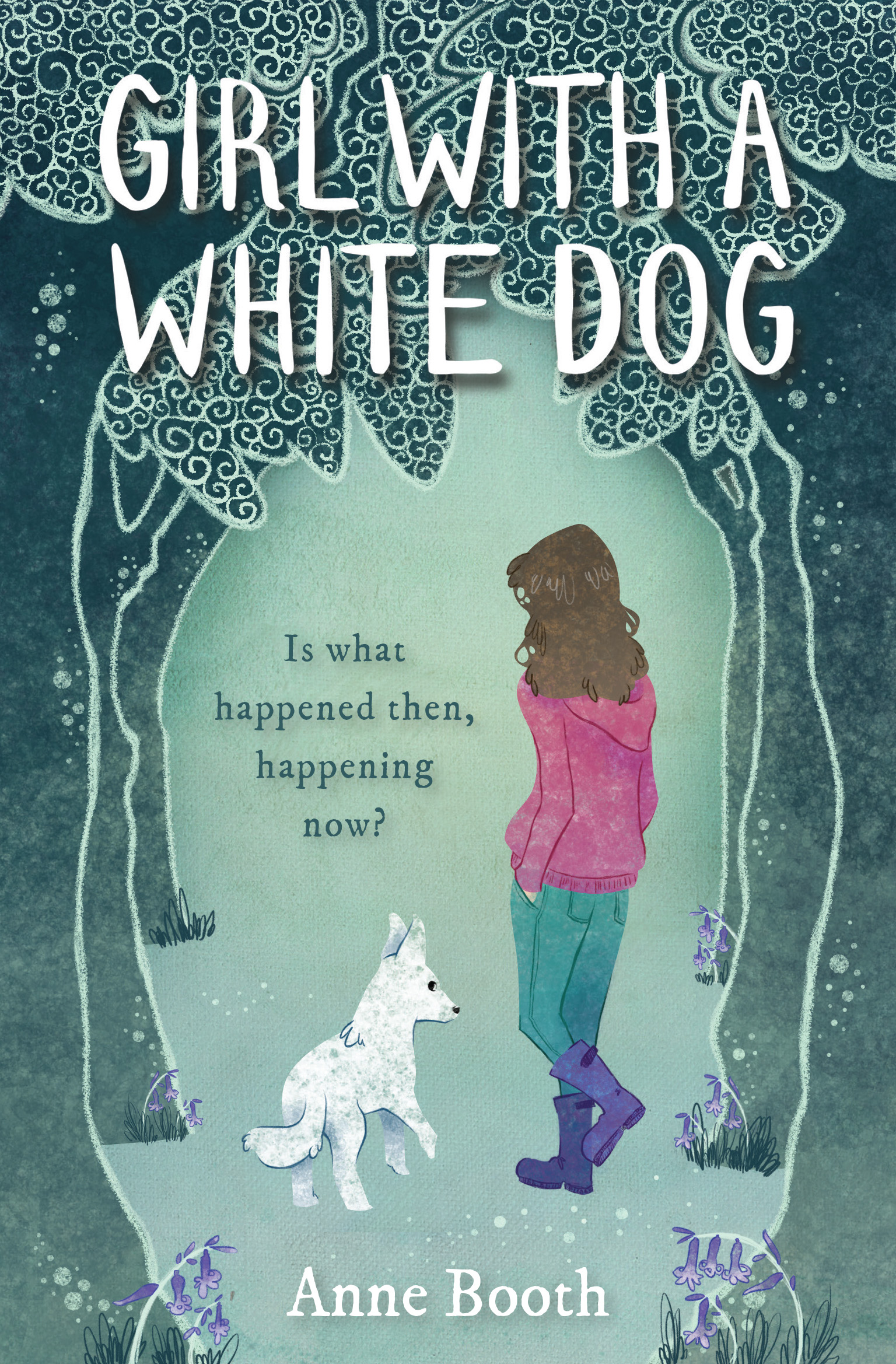
Girl with a White Dog Front Cover FINAL 300dpi
Authors Welcome had the opportunity to chat with author Anne Booth about her book Girl with a White Dog, and learn more about her as an author. Girl with a White Dog is about a modern 13-year-old girl called Jessie, who lives in a small English village and whose grandmother adopts a white Alsatian puppy. With Snowy’s arrival a mystery starts to unfold, and as Jessie learns about fairy tales and Nazi Germany at school, past and present begin to slot together and she uncovers something long-buried, troubling and somehow linked to another girl and another white dog…
AW: Who is your intended audience and why should they read your book?
Anne Booth: My intended audience is children who are learning about Nazi Germany and reading books like The Diary of Anne Frank. It targets children aged from 9-14. I would like them to read it alongside all the wonderful books that are already out there, in order to add one more perspective on the Holocaust and to become aware of current temptations to racism and fear of ‘the other’ in our modern day, recession-hit countries. I wanted to explore what it was like to be a Nazi child and to believe in the stories told by the media, and to show that children and adults today can also be subtly brainwashed and seduced by a kind of fairytale which tells them that they are superior and somehow more deserving of a happy ending than other people.
AW: How did you come up with the title for your book/series?
Anne  Booth: Originally I was going to call my book ‘The Hidden Hours,’  but my agent, the wonderful Anne Clark, of http://www.anneclarkliteraryagency.co.uk came up with the title ‘Girl with a White Dog’, and I am so glad that she did.
AW: Tell us a bit about your cover design? Who designed it and did you have a lot of input into the design?
Anne  Booth: I so happy with the cover! The illustrator Serena Rocca worked with the designer Philippa Johnson and my editors Liz Bankes and Non Pratt to come up with an intriguing cover which combined a modern day girl with a fairytale type feeling. As fairytales are so important in the story and Jessie and Snowy go walking in woods together it really feels true to the book. Once the design was decided on I was shown it for my approval, and the only input I gave was to ask Serena to make the figure of Snowy slightly smaller, as he is a very young dog. I think it is really beautiful and I couldn’t be happier!
AW: How long did it take to complete your novel?
Anne Booth: It took years, partly because of all the background research and also because it was so hard to decide on how to approach the story and what to leave out. I read many, many history books about growing up in Nazi Germany and Nazi policy. I read fairytales and books about fairytales and about the Nazis’ use of fairytales and folklore in schools. I read books about what children learned in schools in Nazi Germany, especially the book Education in Nazi Germany by Lisa Pine. I read about dogs and the Nazis’ attitude towards animals – particularly Boria Sax’s book Animals in the Third Reich and went to an exhibition at the Weiner library in London  http://www.wienerlibrary.co.uk on Nazi children’s books and toys. I read books about the treatment of the disabled by the Nazis, and watched films and documentaries. I also went to Munich and Dachau for the weekend.
The other thing I felt it was very important to do was to read lots and lots of other children’s books by wonderful authors like Michael Morpurgo or Maurice Gleitzman. There are many amazing books on the period  out there by wonderful authors.  I also read children’s books in translation, and books that Nazi children would have read. In Dachau bookshop I also came across the fascinating Young Adult American book The Wave by Todd Strasser, which, written in 1981 based on a  real-life experiment in 1969 by a school teacher, looks at how High School children many years after the Second World War can be seduced into Nazi-like attitudes. I felt that my story, apart from it being for a slightly younger age group, was more about the subtle, creeping way we can get into the dangerous habit of seeing ourselves as ‘goodies’ and others as ‘baddies’. My book is about how we need to recognize the lessons from history so that we don’t repeat the mistakes of the past and create a society where Evil can flourish unnoticed until it is too late.
Originally I wrote the novel entirely set in Nazi Germany, but it didn’t quite work. I loved writing it but I was worried about  the difficulty of showing what it was like to be a Nazi child who loved Hitler without seeming to promote Nazism, and I knew I wanted to write about the implication of the Holocaust on today, so I changed it completely to a modern day story with a mystery in the past. It is odd, because having written the earlier version I feel I know a whole other story and set of characters that nobody else does, and yet they were so important for how I wrote the book set in the present day. I may try to come back to them in the future, but even if I don’t I feel the process was vital to getting to Girl with a White Dog.
AW: Did you ever experience writer’s block? If so, what did you do to get out of the funk?
Anne Booth: Reading history books or fiction, going to exhibitions or watching films can all help with stimulating ideas and writing. I have two dogs, and thinking about my writing whilst walking in the countryside can unblock lots. Getting feedback from other writers – even constructive rejections from publishers or agents – can all help with writer’s block and suggest new ways of approaching things. My family have been wonderful – my husband and teenage children have listened to plot problems and suggested solutions- and once I had an agent I found that Anne was great when I was losing confidence. My editors Non Pratt and Liz Bankes were also great at encouragement during revision of the book once it was taken on and I was writing new material. Sometimes just having a complete break – painting or making things or going on holiday can really give time to untangle knotty problems. Lastly, I am a religious person, and I also find that daily prayer and mediation is vital to help me keep on track as to why I write and what I believe in.
AW: Tell us about the challenges of getting your first novel published? About how long did it take?
Anne Booth: I have always loved reading books and wanted to be a writer, but I didn’t have the self belief to allow myself the time to do it. I went on my first writer’s course about 20 years ago – a week long holiday – but although it inspired me I did not follow on. In 1993-95 I studied part time in the evenings for an MA in Children’s Literature, which I absolutely loved. Ten years later, 2003-2205, married and with four young children, I enrolled on an part time, evening M.A. course in Creative Writing. During and immediately after that course I wrote an adult novel which had an agent for a time but unfortunately was never picked up. The course did however really boost my confidence, and in the meantime I was continuing to read children’s books with my children and for my own enjoyment. So this is a long way of saying that it really has taken me decades to get to this point. In fact, as I wrote my first book (a little biblical story about Jesus and Jairus’s daughter) at the age of 5 – you could say it has taken me 44 years to get published!
AW: Who is your favorite character from your book and why?
Anne Booth: I love lots of characters from the book. I love Jessie and I love Snowy, but I am also very fond of Kate, Jessie’s best friend. I feel very proud as a writer that her personality is more important than her disability — I forget it myself, which is how it should be.
AW: Who is your least favorite character and what makes them less appealing to you?
Anne Booth: My least favorite characters are the gang Jessie’s cousin gets involved with – Liam, Danny and Nicola. I think it will be obvious why! I do try to show that they are children, influenced by attitudes around them, and don’t appear out of nowhere – people like Hitler and his modern contemporaries are always ready to exploit periods of economic hardship and find those with contempt for others and tendencies to violence.
AW: If you could change only one thing about your novel, what would it be?
Anne Booth: I have changed so many things in the novel in the long process of writing and re-writing it, and have had such wonderful editing from my agent and from my publishers, that I honestly wouldn’t change anything now. Originally I tried to cover too many aspects of life in Nazi Germany and there are story lines that were edited out that I do miss, but the advice to cut them out was wise, and maybe I will be able to pick them up again in future novels. I had more about the wonderful Sophie Scholl and The White Rose Movement and Dietrich Bonhoeffer, for example, but at least I did manage to mention them in my afterword!
AW: Give us an interesting or fun fact about your book/series.
Anne Booth: The book Amazing Dogs by Jan Bondeson was the source of one idea that is mentioned passing in my book – that there was a college for dogs in Nazi Germany!
AW: What other books are similar to your own? What makes them alike? Did they inspire you?
Anne Booth: This is such a hard question, as it feels arrogant to compare my books with others I admire! I am only getting used to being an author myself! I think I might leave that to others to say.
AW: What made you decide to become an author?
Anne Booth: I love writing stories. I think about stories all the time, and read every day, and I can’t think of anything I would rather do than pass on those magical experiences to others. I also feel stories are being told all the time, all around us, in our press and general media, and some times these stories are cruel. I want to use any gifts I have to counteract cruel stories and add to the sum of good, stories out there which make the world a better, happier, more loving place, because I believe Love, Goodness and Truth are realities which should be honored.
AW: What is the toughest criticism that you have received as an author?
Anne Booth: I felt very sad when my adult novel wasn’t taken up, but I think that the comments that it didn’t quite work were true – I had over-edited it and so a lot of life had gone out of the story. This has taught me that good editing is vital but that trying to please everybody and losing your voice in the process is not good.
AW: What is the best compliment?
Anne Booth: I think people crying at the story is a great compliment. Non Pratt, my editor at the time, and a writer in her own right, said it was ‘a story to change hearts and minds’ and I think that is such a wonderful thing to have said about your book.
AW: Do you have another job or are you a full-time author?
Anne Booth: Although I have had a lot of part time jobs since becoming a Mum nearly 18 years ago, for the last four years I have been a carer for my very elderly parents who have moved to a house opposite us – particularly my mother who is not well – as well as writing and looking after my four children with my teacher husband.
AW: What can we expect from you in the future? Do you have a new novel or project that you are working on?
Anne Booth: I hope you will see lots from me in the future! I have just finished  my second middle grade novel, which my agent is submitting at the moment. I have a lovely Christmas book for 5-8 year olds  – ‘Lucy’s Secret Reindeer’ coming out with Oxford University Press in September. I also have two picture books illustrated by the amazing Rosalind Beardshaw coming out in the future with the wonderful Nosy Crow publishers. I am very lucky and have a great agent and publishers!
AW: Do you have any tips for readers or advice for other writers trying to get published?
Anne Booth: I’d say to read, read and read, and write the type of books you love to read yourself. Don’t choose to write a particular type of book because you think it will make money, but having written a book you love and believe in, be prepared to edit and re-write and listen to the advice of agents and publishers – they want your book to succeed as much as you do and know both what makes a book work and what else is in the market. For example, I had a great idea for a WW1 story for my second book, but I think I was wisely advised against writing it just now, as there are so many wonderful books already coming out about that subject. It was hard to hear as I loved my idea so much, but I can see that the book I have just finished is more unusual and won’t be competing against such amazing competition or replicating the same material.  I am definitely very grateful to have an agent – and if you can get one you trust and admire then I definitely recommend it rather than doing it all yourself. Anne deals with contacts and contracts and money and I can just concentrate about writing! I have also noticed how much my books have improved thank to the editors – it hasn’t always been easy to  accept that I need to change things – but I can really see how my writing is improving thanks to the process.
Lastly – use Twitter! It is through Twitter I found out about Anne Clark and about Nosy Crow, and I have now made contacts with so many lovely authors and illustrators through it and have had so many supportive chats and advice online. I come across so many ideas for stories through reading about other people’s lives and news items and links on twitter – I found out about the Nazi College for dogs through a link on twitter to a review of Amazing Dogs by Jan Bondeson, for example. I have also been recommended so many fantastic children’s books to read – it’s like an online college for children’s writers
AW: How to you market your book?
Anne Booth: The marketing of Girl with a White Dog is in the capable hands of Bounce Marketing, and through them I have been asked to speak at upcoming Festivals. They have also sent my book out to be reviewed and taken it to conferences, so I feel they have done their utmost to get it ‘out there’. For my part I follow up leads on Twitter, for example, or agree to author interviews when approached, and hope to do lots of school workshops.
AW: How can our readers find you?
Anne Booth: I mainly use twitter @Bridgeanne and I have a blog where I post bridgeanneartandwriting.wordpress.com. Readers can purchase the book through Amazon.com

Saturday, March 1, 2014

Book Discussion With Host Fran Lewis 03/06 by WorldOfInkNetwork | Books Podcasts

Book Discussion With Host Fran Lewis 03/06 by WorldOfInkNetwork | Books Podcasts

Author Spotlight: Judy Snider

Goldyv3off_01
Today Authors Welcome is delving into children’s book publishing with our spotlight on new author Judy Snider. Judy was raised in Michigan, lives in Virginia Beach, Virginia with her husband Gil and her cats Lucy and Bailey. She also has two grown sons, Jon and Nick.
A retired social worker, Judy had the joyful job of working at Cape Henry Collegiate School for eight years. She occasionally does school visits in her city, as she loves reading her book to kids! Goldy’s Baby Socks is Judy’s first children’s book that she has published and it is due out soon. We had the opportunity to sit and chat with Judy about her upcoming books and how she got started as an author.
AW: Tell us a little bit about your book.
Judy: My children’s picture book is Goldy’s Baby Socks. It is the story of a family who adopts a cat and all the fun that follows.
AW: Who is your intended audience and why should they read your book?
Judy: The intended audience is children age 4-7. So far the feedback has been very good. Kids love the book, and find it funny, yet sweet. It is also about a cat, so the younger kids love to make cat sounds.
AW: How did you come up with the title for your book/series?
Judy: I had a cat called Goldy who always brought us socks as presents. I decided to call the book Goldy’s Baby Socks since it was almost as if she was carrying a baby kitten in her mouth. Her picture is on the book’s website so kids can see what she looked like and make the connection.
AW: Tell us a bit about your cover design? Who designed it and did you have a lot of input into the design?
Judy: For this book Thomas McAteer did the cover design and illustrations. He was an illustrator who I found through Xlibris. It was a fascinating experience working with an illustrator while we lived in different cities. I gave him the story and a brief idea of how I would love to see some of the scenes be, and he created the illustrations and cover. He would send them to me for my thoughts and approval. I think the cover of the book is one of the most important parts of a children’s book. It needs to catch a child’s eye to pique their interest as to what’s inside.
AW: How long did it take to complete your picture book?
Judy: It took about 2 months off and on to write it, and then of course to edit, edit , edit. It was published in about 6 months as a print on demand with Xlibris. I wrote another picture book, I Love You, Be Careful with my sister and it was illustrated by Cady Driver. This book targets adults and that took about 6 months as well.
AW: Did you ever experience writer’s block? If so, what did you do to get out of the funk?
Judy: Yes, I did experience writer’s block and chocolate always seemed to help and listening to music. I just wrote my first mystery novella for adults, called, “No Where to Run,” which is currently in the editorial process.  I am working on a second one, and for those I really need music and chocolate. I also just leave the computer and walk outside, and allow thoughts to just come to me.
AW: Tell us about the challenges of getting your first book published? 
Judy: I have written picture books since third grade. I took a writing course with The Institute of Children’s Literature years ago and submitted my picture book to some traditional publishers, and one said we are going out of business, but publish this one with someone. I read to children at a library in a school, and they loved the manuscript for Goldy’s Baby Socks, and kept asking when I would get it published. I decided to go with a Print On Demand publisher , found an illustrator, and then had so much fun reading the books to children and marketing the book. It really is up to the author to market their book, so they need to like it themselves I feel.  My goal was to read my book to children and see them laugh…and they did…the fun part of being published.
AW: Who is your favorite character from your book and why?
Judy: Lucy is definitely my favorite character. She is smart, funny, and is kind to animals. I wanted to make Lucy from a multi-cultural family and make her the kind of girl that many children could relate to. In general, I tend to like strong female characters who also caring and keep going thru tough times.
AW: Give us an interesting or fun fact about your book/series.
Judy: Goldy really did bring socks to us every night. It was just her special thing. In I Love You, Be Careful, my sister and I would laugh at how often we said , “Be careful,” to our children, and they would probably be thinking, Oh, Mom.
AW: What other books are similar to your own? What makes them alike?
Judy: I love so many books, but love beautiful illustrations and books that touch the heart. Each holiday we would find books that were kind and wonderful. I love Mary Hoffman’s book, An Angel Just Like Me.
AW: What made you decide to become an author?
Judy: I have written books since third grade. Being in my 60s now, I have written poetry, many children’s manuscripts, and also song lyrics. I have always loved to read, and most of the time writing is a joy for me. I am loving writing novellas now, and that is my new chapter in my writing career. When my kids were little I took a writing course by mail, joined a writer’s group, and continued reading. I have always loved books  and loved Nancy Drew Mysteries. I can’t draw , so finding good illustrators was so important to me as well as my sister for our book.
AW: What is the toughest criticism that you have received as an author?
Judy: I was told that I preach too much in some of my manuscripts, and that I’m trying to hard to teach a lesson. Thank goodness for editors, as I need help with spelling, and sentence structure.
AW: What is the best compliment?
Judy: The books are funny and heartwarming and I Love You, Be Careful makes a sweet gift for new moms and brides. Most parents can relate to it.
AW: Do you have another job or are you a full-time author?
Judy: I am a retired social worker, retired from working at a school, but I volunteer a lot. I also help my husband who wrote a medical/political thriller set in New York City and Ukraine banter ideas about his second book he is writing.
AW: What can we expect from you in the future? Do you have a new novel or project that you are working on?
Judy: I will always write, but hope to finish my second book, am trying to get my second Goldy book picked up by a publisher, collaborating with another author on a script she did , and writing and collaborating on more songs.
AW: Do you have any tips for readers or advice for other writers trying to get published?
Judy: Edit, Edit….don’t give up- really don’t give up…you can write a book….children’s or novel….write every day if only for 10 minutes.
AW: How do you market your book?
Judy: I promote myself in Alumni magazines and local newspaper articles. I have also joined groups with subject matter similar to my book (Cat Writer’s Association).  I have also worked Marsha Casper Cook and Virginia Grenier, who  do great book tours. They also made a book video for me, and let me do interviews on Blog Talk Radio, etc.
Readers can find me on my websites  www.goldysbabysocks.com and www.iloveyoubecareful.com.  There are pictures and videos, and you can learn more about the book.
Goldy6

Monday, February 24, 2014

Hollow Vengence - author Jan Richmond - Reviewer - Fran Lewis - Michigan Avenue Media


4.0 out of 5 stars Revenge: How far would you go?, February 24, 2014
This review is from: Hollow Vengeance (Paperback)
Hollow Vengeance: Jan Richmond

There are people in this world that are unable to forgive others when they feel an injustice has been committed whether to them or someone else. Many fall prey to their own failings and often enact violence on those they feel wronged them. When someone without any character or substance goes after another person harming him or her with violent revenge we can say that they finally avenged those that have been killed or wronged. But, what happens when one army Lieutenant falls prey to his own temper, anger and shortcomings and decides that the only way to get retribution for the deeds committed by others was to do it himself.

A chance meeting at Ft. Walton Beach would bring Lieutenant Frank Barrett and Ramsey Davis together. A short courtship and instant chemistry and these two young people decided on marriage and a life together. Within the prologue the author presents a shortened version of their meeting, their wedding and their hopes for the future as Frank’s stay would be short being called up to serve his country. Within the first chapter the author relates Frank’s experiences as an air force pilot, introduces his squadron, commanding officers and allows readers to understand his mission and what he and the newly formed 555th squadron would be expected to do. Listening to Captain Young, his commanding officer relate his instructions, explaining how they would interact with the enemy and learning how to deal with missions the reader begins to understand just how important these men were to winning the War in Vietnam. Within Chapter 2 and 3 the author allows the reader along with Frank and the other pilots to engage the enemy in battle, understand what happens when the radar and missiles were unreliable and the need for better weaponry would have saved more lives. Learning the terminology, fighting and coming up against MiG’s Frank and his squad fought hard, made a plea to the brass for better weapons and hoped before all was said and done they would complete what they were there for and more. But, each mission was dangerous and you could feel the tension mount, their hearts beating and the enemy closing in as lives were lost, missions were won and SAM’s were downed. But, with so much at stake and the war in full swing Frank was grateful to make is home for Christmas and here is where our story takes a different direction.

Returning home to his wife was the highlight of his life and wanting to make her happy his goal. Forming a tight relationship with another fighter pilot named Chad helped him to not only survive but would ease the transition between home and Vietnam as some harsh realities come to light when Ramsey begins to unravel. Wanting more out of life and a better place to live she gets drunk becomes depressed and Frank needs to work some magic on her to bring her around.

Nicknamed “Bee Sting,” Barrett his stinger during the war was quite sharp but not as sharp at the one he uses when fate takes her stab at him and turns his life into shreds. Within the docks of Port Tampa lives the mafia. As Little Eddy makes his way to a Panamanian registered ship his mission is clear. Hand over the money and get the drugs. Simple enough you would think. Little Eddy is cruel, unfeeling and often too strung out to know be aware of his surroundings, handle a deal or even communicate at times. But, entering the cabin of Captain Diaz he manages to complete what he came for but what happens next will change the complexion of not only his life but others too.

Ramsay and Frank were blessed with Chad’s friendship and meeting his wife Peggy made it even more special. Hoping that they would settle nearby as Pan Am was employing Chad and so much Peggy, they became more than just fast friends. But, one rainy evening would change it all for Frank. But, first let’s meet Santo Bonocante and join him for his meeting with his henchmen and find out what happens when the Mafia is involved. Enter Little Eddy and learn what will happen if he encounters the wrath of this man. Frank enters his home and finds Ramsey strung out on her bed crying. Unhappy with their life what will it take to make her smile? Hoping that buying a home, continuing their friendship with Chad and his wife would endear her to him. But, one swift movement of a car, one false move as Ramsey, pregnant and having trouble moving runs after their dog in the dark and gets hit by a car. Happening in a split second and not really understanding the end result at first, Ramsey waddles after the dog to capture him, finding herself lying in a heap on the wet pavement. But, Little Eddy did not stop and knew that the right judge could be bought and what happens next will embroil the reader in a story of murder, mystery and intrigue. The dialogue at times seems quite different as the character addresses the reader, a narrator and then a commentary at times. Told in the third person for most of the novel the character’s actions are described as the many incidents occur. Throughout chapters 10- 11 we learn more about her condition, her dramatic letter and message to Frank and then her death. But, the end is far from near as the culprit is caught but the sentence he gets will not only anger Frank but the reader too. A judge that was on the take and a man who was deported to Panama instead of sentenced on some type of murder charge inflaming Frank and putting into action a chain of events that would change his life, make you question his morals and put his friendship with Chad on the line.

Frank makes his way to Panama in order to take care of Little Eddy with the help of Chad but along the way he meets Toni. Thinking he is home free and will be able to avenge his wife’s death he befriends her but with caution. Finding out where Little Eddy was proved not too difficult, as he was able to convince some of the locals that he was there for other purposes. But, what he does will surprise readers and leaving him for dead might be his downfall. Frank has anger issues and cannot seem to control his rage when he feels an injustice has been done. No one seemed to realize the change in his personality and his determination to right wrongs in a violent way.
Vengeance can be defined as a “downward spiral of pain and betrayal.” When one person decides to take action against another and hurt them you might say they are enacting some type of vengeance. But, Frank’s manner is so intense that at times he seems irrational and unfocused whereby becoming one and the same with his rage devoid of realizing what he is doing or where he is going. As he follows a downward path he decides to go after the judge next but with an unsuspecting helper. Getting to know Toni he finds out that her father is a retired General and uses her friendship to foster his plans against the judge, which leads to disaster.

With Frank thinking Little Eddy is out of the way and enacting his own form of retribution on the judge he begins training for his second tour in Vietnam. Promoted to Major and asked to remain to train newer troops, Frank things he’s about to start a new life making sure he keeps his promise to Ramsay and make it worthwhile. The author continues to explain the many facets of training a fighter pilot, the missions but Frank is not that lucky the last time and winds up captured and placed in a POW camp. The graphically depicted scenes will help readers understand our military men had to endure at the hand of the enemy. But, when freed and meeting someone that might change his life what he does should make everyone realize that he needs some type of help but will it? Someone cuts him off a chase begins and Frank is in heavy pursuit of an unknown driver. What happens at the end will surprise readers and let you know that this is just the beginning for Frank. Someone new is in his life but will she remain? Will he keep his promise to Ramsay and create a life that is worthwhile? Will what happened to him in Vietnam haunt him forever? What will happen if he faces off with Little Eddy? Will the judge come after him? Just what will he get from enacting revenge on so many? Hollow Vengeance: Hollow: an empty cavity with nothing in it. A place where that is lower than the area around it or in this case a man whose spirit and anger has taken control of him so deeply he has no place to go but down. Will Frank feel victorious or will it be a hollow victory achieving his goal but losing something important along the way? A mystery that unravels the within the mind of one man as Frank takes us deep within the jungles of Vietnam, to the docks of Panama and back to Florida trying to console his anger, live with his deeds and find a way to redeem himself for his actions. But, does he and will he? This is the first of many Frank Barrett mystery/thriller novels. Using his knowledge of the Vietnam War and research added about fighter pilots and the weaponry and plans used author Jan Richmond takes us back to a war that most have forgotten.

Sunday, February 23, 2014

Monday, February 17, 2014

Brian Scott Mednick, author of Unnecessary Headaches: A Novel


Brian Scott Mednick is an author, filmmaker, and stand-up comedian who graduated New York University's Tisch School of the Arts with a BFA in Film and Television in 1995. Brian spent fifteen years writing and researching a biography of Gene Wilder entitled Gene Wilder: Funny and Sad, published in December 2010 by BearManor Media. Brian is widely considered the foremost authority on Mr. Wilder and his work, and his book has been cited in publications in the United States, Europe, and India.

From 1990 – 93, Brian served as producer of the syndicated radio program Soap Opera Radio, which featured interviews with the stars of daytime television.  Brian has been active in the New York independent film scene and has worked in various capacities for Geraldo Rivera’s Investigative News Group, Gramercy Pictures, Shooting Gallery, and New Line Cinema.

Brian Scott Mednick wrote, produced, and directed the 1992 short film
Confessions of a Male Prostitute, which received a rave from Rex Reed, who wrote, "I am a bit speechless. This is exemplary work...revealing much sensitivity and intelligence. I actually could have hung in there with [these] characters for another hour or so." Mr. Reed further said that Brian has "obvious talent" and concluded, "This short film is so good I would be very keen to see what [Brian Scott Mednick comes] up with in the next few years."

Brian has reviewed film and theater for such publications as Show Business Weekly and Good Times.  His political writing has appeared in Metro and on parcbench.com.  He was a regular contributor to The Jewish Voice for nearly two years.

Over the years, he has interviewed such celebrities as talk show hosts Alan Colmes and Joy Behar, former New York Governor Mario Cuomo, former Massachusetts Congressman Barney Frank, comedian-director David Steinberg, directors Arthur Hiller (Love Story, Silver Streak), Bud Yorkin (Start the Revolution Without Me, Twice in a Lifetime), and Mel Stuart (Willy Wonka & the Chocolate Factory), producer Mace Neufeld (The Frisco Kid, The Hunt for Red October), actress Kelly LeBrock (The Woman in Red, Weird Science), Oscar-winning actor Martin Landau (Crimes and Misdemeanors, Ed Wood), 2013 GOP New York mayoral contender John Catsimatidis, and comedienne Marilyn Michaels.  He twice interviewed the late former New York City Mayor Ed Koch, including doing one of the very last interviews he gave.

He has performed stand-up comedy at many New York City clubs including The Duplex and Don't Tell Mama.  Brian's second book, an anthology called
Drinking Games...and Other Stories, was published on November 1, 2011 and is available for purchase from Amazon.com and CreateSpace.  His latest book, the novel Unnecessary Headaches, is now available from Amazon.com and CreateSpace.

You can contact him at
BrianScottNYC@gmail.com.
Title: Unnecessary Headaches
Author: Brian Scott Mednick
ISBN: 978-1-475-23978-2
Page count: 150 pages
Genre: Fiction/Family Life
Price: $15.00
Tell us about your book:
Harvey and Betty Sugarman seemed to have a good life.  They were both successful in their careers – he a lawyer, she a journalist – and lived comfortably in Manhattan’s Stuyvesant Town.  Most importantly, they took pride in having a bright son in college named Daniel.  But just as some underlying secrets are about to be revealed, the Sugarmans’ world changes when Betty is diagnosed with ovarian cancer.
The Sugarman men try their best to be strong as Daniel struggles to hide his homosexuality from his parents and Harvey tries to put his dream of a second career as a writer of Broadway musicals on hold.
Set against the backdrop of modern day New York City, Unnecessary Headaches is a poignant story of a family trying to live their lives despite the brutal realities that stand in their way.
“A moving, memorable, and deeply human story of a family dealing with life’s heartaches,” says Joe Franklin of Bloomberg Radio.  “I couldn’t put it down.  A very impressive first novel.”
How long did it take to write the book?
On and off, about two years.
What inspired you to write the book?
The story just came to me.  I wanted to write a contemporary story about regular people whose lives suddenly change and how they deal with a crisis.
Talk about the writing process. Did you have a writing routine? Did you do any research, and if so, what did that involve?
I did not have any formal writing process.  I wrote the bulk of the book and then abandoned it for more than six months, then finally looked at it again and thought it was too good not to finish.  But I had terrible writer’s block.
What do you hope your readers come away with after reading your book?
Well, the feedback I have gotten from people who have read it is that they were very moved by the story and actually cried.  That is a very big compliment.  I hope readers find the story compelling, care for the characters, and above all are entertained.
Excerpt from book:
SEVENTEEN
Betty came home after spending eight days in the hospital.  Her infection was gone but the whole experience wiped her out.  Once home, it was like she had just undergone more chemo, for she was tired, in bed most of the time, and hardly eating.  Her frustration was apparent.  It was difficult to get her to engage in conversation.  When she was awake, she often just sat in the living room staring into space.  She would try to read but just could not concentrate.  And she had several more chemotherapy sessions to look forward to.
            She finished her last chemotherapy session mid-February and was given the news that she was in remission.  Harvey and Betty were thrilled.  But they were also realistic – she would need to remain cancer-free for a year and a half in order to be completely out of the woods.
            Daniel was relieved that Betty was in remission.  Over the next several weeks, he was able to concentrate on his studies and spend lots of time with Troy.
            At the end of March, Betty received a phone call from Dr. Spitz, who was concerned about her white blood cell count.  Betty needed more tests, which revealed the cancer was back.  Her remission did not even last two months.
            Harvey and Betty were devastated.  More chemotherapy was to follow, as well as radiation.  They could barely muster up the energy to talk to each other, except to agree on one thing: they were not going to tell Daniel.  He was so elated at the news of Betty being in remission that they feared telling him would make him neglect school and worry.
            Still thinking his mother was in remission, Daniel insisted on coming up from school.  With Betty in good health, Daniel felt now was the time to come out to his parents.
            One afternoon in mid-April, after the three had a very nice lunch in Union Square, Daniel stood in the living room and declared, “I’m gay…  I’m...I’m gay.”
            Time seemed to stand still as the words flowed from Daniel’s mouth like a bowling ball shattering the glass coffee table.  Harvey and Betty looked at each other.  There was silence.  Then Harvey cleared his throat and said, “Are you sure?”
            “Yes, dad, I’m sure.”
            Harvey nodded thoughtfully.  Betty seemed a bit in shock.
            “Mom?  Are you all right?”
            “I...I don’t know what to say.”
            “Well, are you angry?” Daniel asked.
            “No, I’m not angry.  I...”
            “I think we just need to sorta take this in,” Harvey offered.  “You know, just let it settle and then maybe, you know, analyze it and think it through.”
            “Well, there isn’t much to think through,” Daniel said.  “I’m gay, I’m happy, and I love you.  And I thought you should know.”
            “Well, we appreciate that, we do,” Harvey said.
            Daniel seemed to expect more from Betty but she just seemed dazed.  Daniel needed to get out of there and was about to leave when Betty asked, “Is Troy gay too?”
            “Yes, he is.”
            “So are the two of you...”
            “Yes, mom.  Troy is my boyfriend.”
            Another long silence.
            “Well, why don’t I let you both talk or do whatever,” Daniel said.  “I’m gonna go out.”
            “Yes, yes,” Harvey said.  “Good idea.  You come out – I mean, ha, I mean go out.  Come out?  Did I say that?  You go out and do...what...you do.”
            Daniel left the apartment.  Harvey and Betty sat still for a bit before Betty said, “I think I want a glass of wine.”
Betty went to the kitchen and poured herself a glass of Chardonnay from a bottle in the fridge that was left over from dinner a few nights ago.  She took a generous sip before firmly telling Harvey, “I blame this on the Internet!”
            “What?”
            “I’m serious.  Everything is online now.  Everyone is free to be whatever they want.  No consequences.  You want to have sex with dogs, there’s a Web site for that.”
            “Betty, listen to yourself.”
            “I can hear myself perfectly fine.  Are you going to tell me you are happy with this news?  You’re happy that our only child will never get married or give us grandchildren?”
            “You don’t know that.  Look, it’s a lot to take in.  But let’s not lose sight of the bigger picture.  I mean, he’s a good kid.  Always has been.”
            “I had doubts about sending him to that hippie arts college in the middle of nowhere.  I never liked the idea.”
            “Hippie?”
            “I really needed this, right?  I really needed this with all that’s going on with me.”
            “Hey, that kid has a life outside of us, okay?  Where is your compassion?  Where is that big bleeding compassionate liberal heart now that your son needs it?”
            “Leave me be, will you?”
“No!  I am not giving you a pass because you’re sick.  Do you remember when we first met?  How we used to joke about being two commie left-wing liberal Jews?  A perfect match.  Remember years ago when you got all worked up because you thought we were committing some crime by having no black friends?  I have news for you, lady.  When you got sick, we didn’t have any white friends either, okay?!  I had to deal with this all by myself.  And you – now, of all times – you have a problem with hearing that our son, the most important thing in our lives, having a problem with him telling us he is gay?  Good God, woman.  Are you crazy?  He told us he is gay and you are treating it like he robbed a bank.  I love Daniel.  No matter what.  I am proud of him.  I am proud – hell, I am overjoyed – he found someone like that Troy.  Think of someone else besides yourself, Betty.  Daniel is our world.”
            “And you want him to deal with all of the shit that goes along with being gay?  The jokes and the attacks and the AIDS?  I just want him to be regular.”
            “Regular?  He’s not a cup of coffee!”
            “You know what I mean!”
            “Betty, we are in twenty-first century New York City.  Things are different now.  Daniel is a smart kid, he knows how to take care of himself.”
            Betty sat down and started to weep.  Harvey sat next to her and put his arm around her.
            “It’ll be okay,” Harvey assured her.  “It’ll be okay.”
Where can we go to buy your book?
Amazon.com
Any other links or info you'd like to share?